Planning
How to plan a year you'll keep
Fewer resolutions, three honest themes and a reset on the first of every month: a gentle way to plan 2027 that still works in March.
A year plan usually fails in February, and not for lack of willpower. It fails because it was written for a version of you with endless free evenings and no bad weeks.
This is a gentler way to plan: look back first, choose a few themes instead of a long list, and build in a reset so a slow month never ends the year.
Look back before you look ahead
Before you plan 2027, spend twenty minutes with 2026. Answer three questions on paper:
- What gave me energy this year?
- What drained me that I could change?
- What do I want more of next year?
Your answers are the raw material for everything else. They're also a kind reminder that you did more this year than you probably remember.
Choose three themes, not twenty goals
A theme is a direction, like rest, health or make things. It can survive a busy month in a way a strict goal can't. Under each theme, write one small thing you'll actually do.
Instead of
Try
Work out every day
Health: a walk after dinner, three times a week
Read 52 books
Rest: read before bed instead of scrolling
Start a business
Make things: one evening a week for my own project
Three is enough. If everything is a priority, nothing gets your best hour.
Fill in the fixed dates first
Open your year-at-a-glance pages and add everything that won't move: birthdays, holidays, school breaks, trips, renewals and deadlines. Now you can see which months are already full before you add a single plan.
One small 2027 detail: January 1 falls on a Friday, so the new year begins with a weekend. That makes Monday, January 4, a natural first day for new routines.
Give each quarter one focus
A year is too long to hold in your head; a quarter is just right. Split 2027 into four seasons of about thirteen weeks and give each one a single focus from your themes.
- January to March: set up routines while the year is new.
- April to June: the longer days suit outdoor goals.
- July to September: plan around summer and back-to-school.
- October to December: keep it light. The holidays fill it anyway.
Reset on the first of every month
This is the step that keeps the whole plan alive. On the first of each month, sit down for twenty minutes:
- Look back at last month. What happened, honestly?
- Move anything unfinished forward, or let it go on purpose.
- Choose the three things that matter most this month.
Twelve resets a year means a bad month costs you a month, never the year.
Take ten minutes each week
Sunday evening or Monday morning, look at the week ahead: appointments, the month's three priorities, and one thing that's just for you. Write the week's plan in pencil. Weeks change, and that's fine.
Plan for the off weeks
There will be weeks when the planner stays closed. When you come back, don't recopy what you missed or try to catch up. Open to today's page and start there.
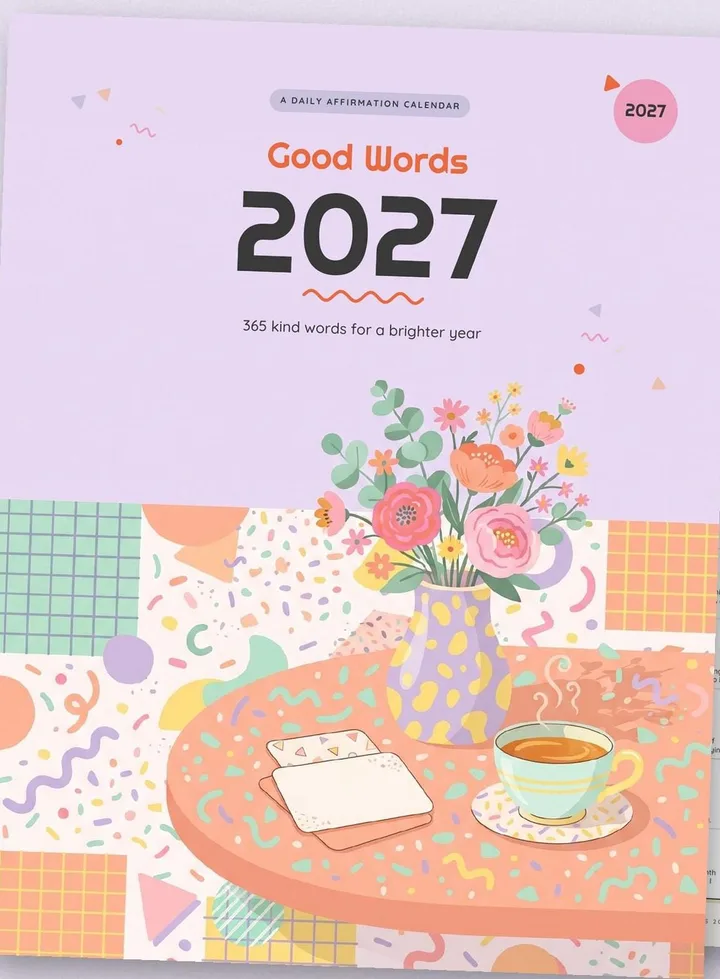
If you'd like to try this on paper, the whole My Era 2027 journal is free when you join the LiesseJoy list: the 2027-at-a-glance page, every monthly era and a dated page for every day of the year.
— Min
Try it with

Free journal · All of 2027
Get the whole My Era 2027 journal, free
The complete 2027 issue of My Era, Editorial edition, not a preview. Join the LiesseJoy email list and it downloads as soon as you confirm your email.
What's inside
- All 365 days, dated, each with its own affirmation and prompt
- Twelve monthly eras with covers and reviews
- Fifty-two Sunday Editions and four Quarter Wrapped check-ins
- 2027 Wrapped at the end, in US Letter, ready to print
Send me the 276-page journal
Loading the sign-up form…
Occasional emails from LiesseJoy. Unsubscribe any time.