Devotional journaling
How to keep a Lent journal all the way to Easter
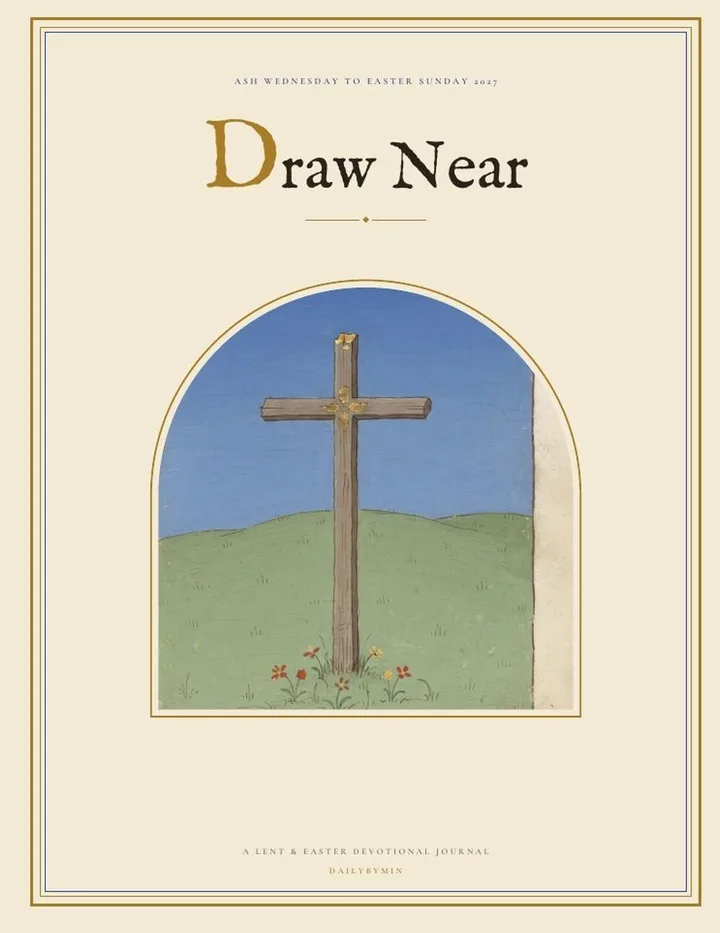
Lent 2027 runs from Ash Wednesday, February 10, to Easter Sunday, March 28. How to journal through all of it, without guilt when a day slips.
Most Lent journals start strong on Ash Wednesday and go quiet somewhere in the third week. Not because anyone stopped caring, but because the plan was bigger than an ordinary Tuesday in March.
If your church keeps Lent, here's how to plan a journal that fits real life and makes it all the way to Easter morning.
Know the shape of the season
In 2027, Lent begins on Ash Wednesday, February 10, and ends with Easter Sunday, March 28. That's 46 days on the calendar. The “40 days” of Lent don't count the six Sundays, which are traditionally kept as small celebrations of the resurrection, even in Lent.
Mark three dates in your journal before you begin:
- Palm Sunday, March 21, the start of Holy Week
- Good Friday, March 26
- Easter Sunday, March 28
Seeing the whole season at once helps. Six and a half weeks is long enough to need a plan, and short enough to finish.
Give the journal one job
A Lent journal can hold many things. Pick one main purpose:
- A reading plan, with a few lines about each day's passage.
- Prayer: what you're bringing to God, and later, what you noticed Him doing.
- A fast: what you gave up, what you're turning to instead, and what the space shows you.
One job makes it easy to know what to write. A guided devotional journal already decides this for you, which is half of why they're easier to finish.
Make each day small
Ten minutes is plenty. Choose a time and a place, and tie them to something you already do every day: the first coffee, the school run, the lunch break. The habit you already have carries the new one.
Keep the journal and a pen right there, open to today's page. The fewer steps between you and writing, the more days you'll write.
Use Sundays well
Because Sundays sit outside the 40 days, they make natural breathing room. Use them to rest, to catch up on a missed day, or to reread the week and write one line about what stood out.
Six Sundays, six short looks back. By Easter they tell a story.
When you miss a day
You will miss a day. Everyone does. When it happens, don't restart and don't try to fill in three pages at once. Turn to today's page and begin there. A blank page in the middle of Lent is fine. It's honest.
Slow down for Holy Week
Plan Holy Week before you get there. One simple way: read Mark 11 to 16 across the eight days from Palm Sunday to Easter. Mark 11 begins with Jesus entering Jerusalem, and Mark 16 ends with the empty tomb.
Give Good Friday and Holy Saturday a little more time if you can. The quiet before Easter is part of the story too.
Finish on Easter morning
On Easter Sunday, before the day gets busy, read back through your journal from Ash Wednesday. Then write one page: what you hoped for on February 10, what actually happened, and what you want to carry past Lent.
A finished Lent journal won't be perfect. It will have short days, missed days and one or two pages that surprised you. Keep it. Next year, you'll be glad to read it on Ash Wednesday.
— Min
Try it with

Free journal · Psalms 1–41
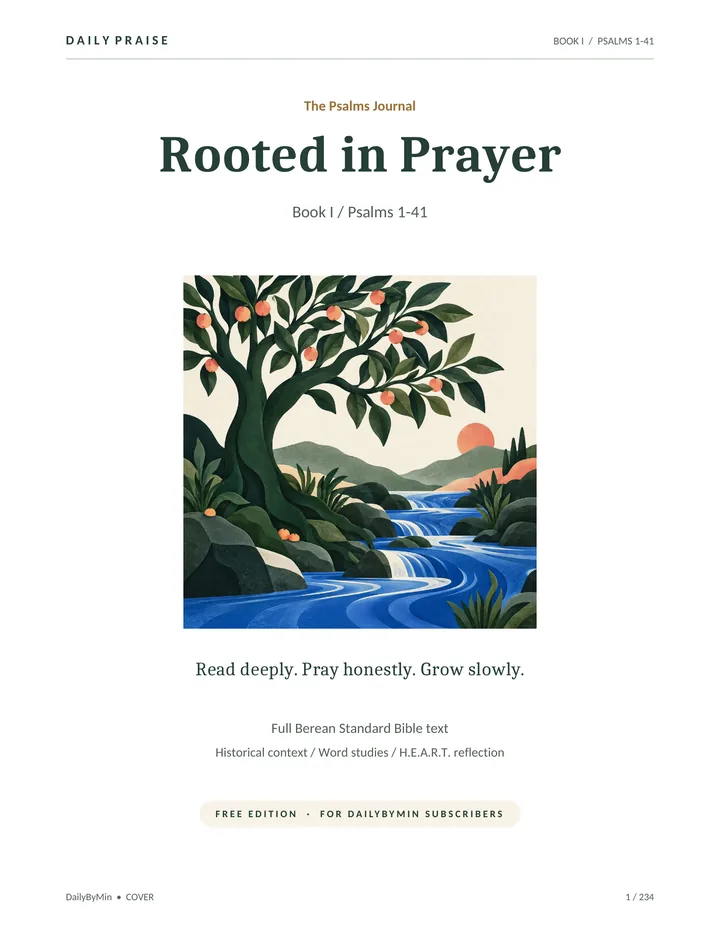
Get Book I of the Psalms journal, free
The whole first book of Rooted in Prayer, Psalms 1–41, not a sample. Join the DailyByMin email list and it downloads as soon as you confirm your email.
What's inside
- The complete Book I: all 41 psalms in the Berean Standard Bible
- An illustrated study for every psalm: context, a word study and one small practice
- H.E.A.R.T. prompts and writing space for each psalm
- US Letter, ready to print
Send me the 234-page journal
Loading the sign-up form…
Occasional emails from DailyByMin. Unsubscribe any time.